 China International Supply Chain Expo
Syngenta showcases AI-driven agriculture innovations at CISCE 2026
Source: China.org.cn Release time: 2026/06/26
At the Fourth China International Supply Chain Expo (CISCE), held in Beijing from June 22-26, Syngenta Group China is showcasing how data-driven agriculture is changing the way food is grown. Its booth in the Green Agriculture section highlights a range of AI-powered breeding tools and crop protection technologies, designed to improve precision and efficiency in farming.
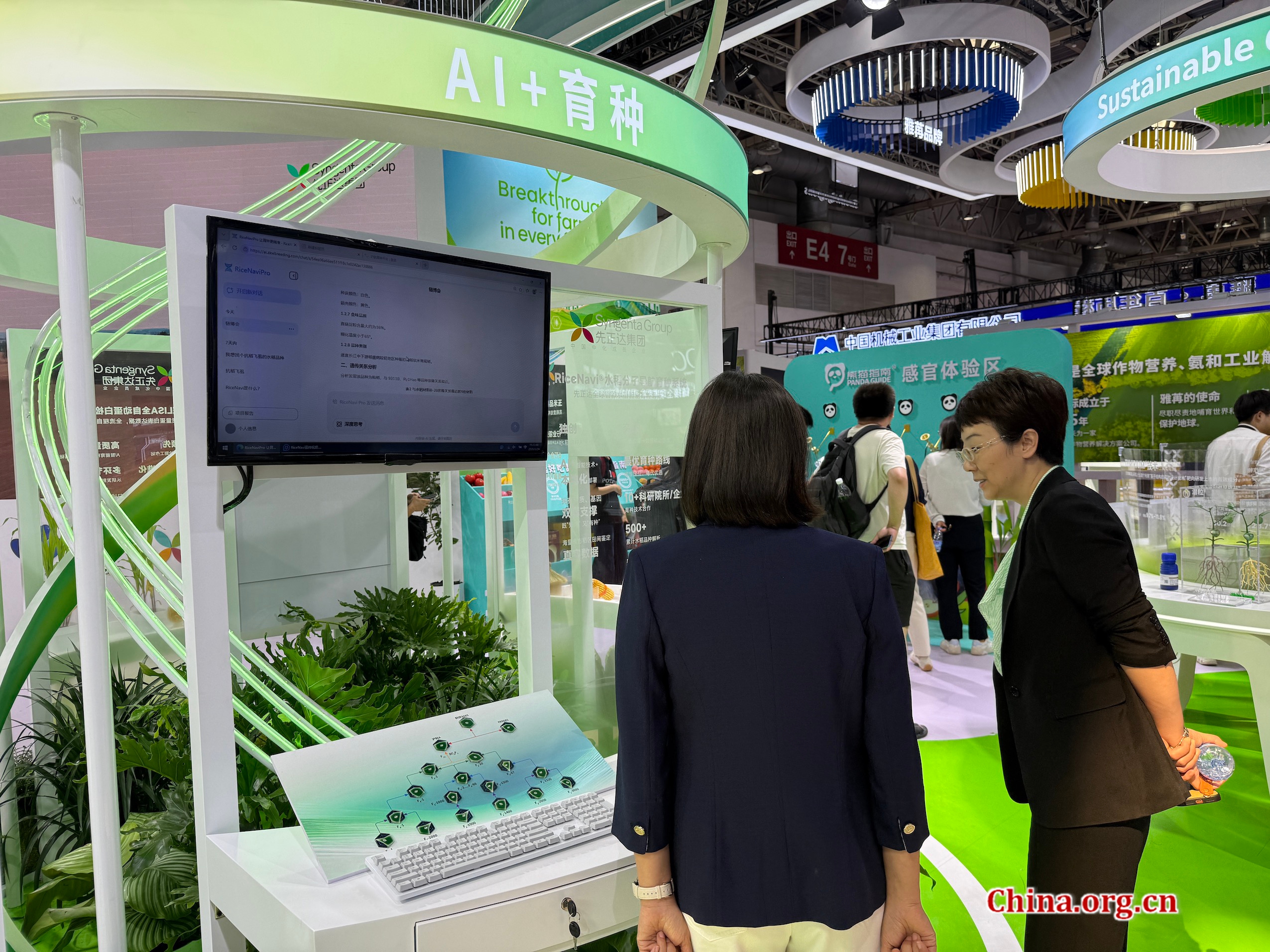
The booth of Syngenta Group China at the Fourth China International Supply Chain Expo (CISCE) in Beijing, June 24, 2026. [Photo by Liao Jiaxin/China.org.cn]
Among the highlights is RiceNavi, an AI-powered rice breeding navigation system making its debut at the expo. By the end of 2025, the technology had completed genetic analysis on nearly 500 rice varieties and helped develop several high-yield commercial rice variety. Another tool on display is GASEL, a genomic selection system that simulates millions of genetic combinations, reducing the need for costly field trials. Two commercial corn hybrids developed using the system are already on the market.
A common thread running through these tools is data. Syngenta's automated ELISA protein testing workstation, also on display, provides standardized, high-throughput data — a critical foundation for machine learning in breeding.
AI is being used not just as a tool, but as a productivity multiplier, according to Xie Qi, chief scientist of Syngenta Group China. With more investment in agricultural computing power and big data, Xie said, the industry is poised to make a systemic improvement in breeding efficiency.
Beyond breeding, the company is showcasing a domestically developed miticide — a specialized pesticide designed to tackle resistant mite infestations. It is also highlighting a potato supply chain pilot project with McDonald's China and McCain China, which is now in its second planting season, whereby Syngenta provides farmers at the upstream end of the supply chain with services ranging from variety planning to digital agronomy.
According to Su Fu, president of Syngenta Group China, the challenges facing agriculture today — such as climate change, evolving pests and resource constraints — call for both technological innovation and deeper collaboration across the entire value chain. Over the past four years, he noted, the CISCE has become a key platform for translating breakthroughs into industrial impact.
At this year's expo, Syngenta also released a practical guide for evaluating regenerative agriculture practices, developed in conjunction with several research institutions and industry partners. It is the first systematic evaluation guide for regenerative agriculture based on field practice in China.
After four years of exhibiting at the CISCE, what stands out about Syngenta this year is less about individual products than how they fit together as a system, connecting on-farm decision-making with the broader supply chain.